Muscle-Building Training Plan for Beginners
Getting started with strength training comes with a lot of uncertainty for many people. Many beginners train regularly and still don't make progress - usually because clear structure is missing.
 10 Reps Editorial
- 1For beginners, 2 to 3 sessions a week with 5 to 6 compound exercises and 2 to 3 sets each is optimal - more doesn't automatically mean more progress early on.
- 2The right weight allows 8 to 12 clean reps, with 1 to 2 reps still left in the tank at the end of the set without form breaking down.
- 3Visible changes usually show up only after 8 to 12 weeks of consistent training - technique and strength gains come as early as weeks 4 to 6.
Start with structure, not guesswork
Getting started with strength training comes with a lot of uncertainty for many people. Many beginners train regularly - and still don't really make progress. Not because they're doing anything "wrong," but because they're missing clear structure. If you're looking for a muscle-building training plan for beginners, you want to get stronger, build muscle, and avoid getting hurt along the way.
At the same time, the market is full of plans, PDFs, and videos that are either too complicated or so superficial that they offer no real guidance. The result: training by feel, frequent plan changes - and progress that's hard to track.
A practical beginner training plan for strength training should therefore do one thing above all: create clarity.
What beginners actually need in strength training
Especially at the start, it's not about knowing as many exercises or training methods as possible. What matters are three fundamentals: a clear training rhythm, a manageable exercise setup, and simple, traceable progression.
Not five variations per exercise, but a plan that repeats week after week. A good beginner training plan reduces decisions. It means you know what's on the agenda when you walk into the gym, instead of wandering aimlessly from machine to machine. Muscle growth doesn't come from perfection - it comes from consistently repeating smart load.
How often should beginners train?
For beginners, a training frequency of 2-3 sessions per week is optimal. Two sessions already produce noticeable progress; three sessions are a great middle ground between effectiveness and everyday practicality for many people.
This frequency provides enough training stimulus for muscle growth, sufficient recovery between sessions, and fits realistically into a normal everyday schedule. More training days don't automatically mean more progress - what matters is that the program gets followed consistently over several weeks.
Which exercises make sense for gym beginners?
A gym training plan for beginners should focus on basic movements. Not because isolation exercises are bad, but because compound movements train several muscle groups at once and enable faster progress.
Typical movement patterns in beginner training are:
5-6 exercises per session are enough, performed cleanly and with controlled weight. For most beginners, 2-3 sets per exercise are completely sufficient to create an effective training stimulus while still recovering well.
Example: a simple beginner gym session
To make this concrete, here's an example of a structured full-body session:
A note for beginners: choose a weight so the last few reps feel hard, but technique stays clean. The goal is repeatability - not maximum exhaustion.
The right beginner training plan: how much weight is correct?
One of the most common beginner questions is: how heavy should I train? The sports-science answer is simple: the weight should be chosen so that 8-12 clean reps are possible.
At the end of the set, 1-2 more reps should still be possible without technique breaking down. This range is ideal for beginners because it smartly combines learning technique and building muscle. Rep ranges between 6 and 15 can also be effective - what matters isn't the number, but clean execution. Technique always comes before weight.
Why many beginners see no progress despite training
Many beginners train regularly but still don't progress. Common reasons include exercises that change too often, missing progression, training "by feel" instead of by plan, and no clear sense of your own training level.
A training plan isn't a rigid corset - it's an orientation framework. Without that framework, muscle growth often becomes random and progress hard to track.
How progression works thoughtfully for beginners
Progression doesn't mean moving more weight every single session. For beginners, it's entirely enough if reps become more stable, technique improves, and weights climb slowly.
A good muscle-building training plan thinks in weeks, not individual sessions. A simple rule: if you can cleanly complete all sets at the top of your rep range in two sessions in a row, increase the weight by the smallest available increment next time. That keeps your progress controllable and sustainable.
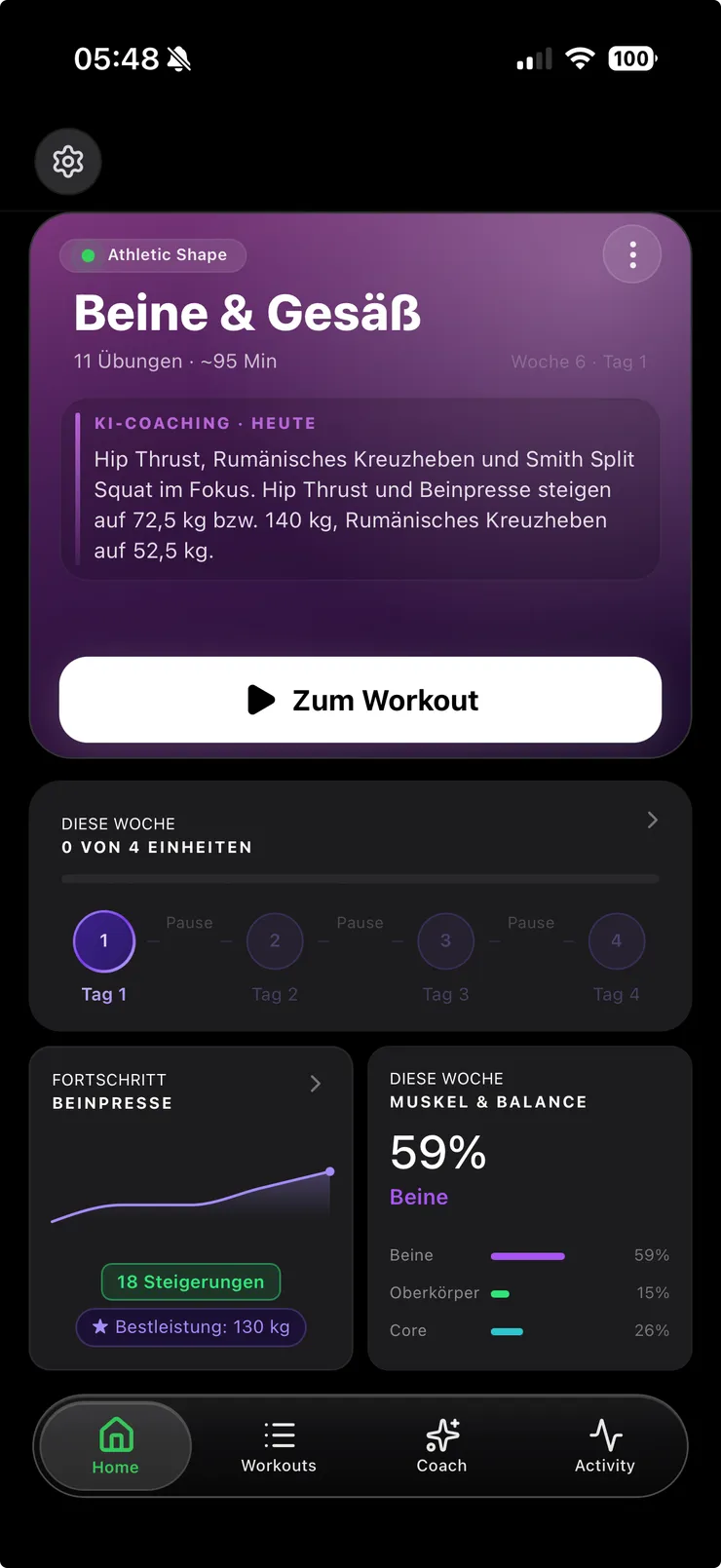
OUR APPROACH AT 10 REPSMany training plans explain what to do. We focus on making it clear when something is due - and why. Our beginner gym plans provide a fixed training structure, reduce decision fatigue in the gym, and develop step by step alongside your training level.
That's how muscle growth happens - not by chance, but through a system that provides guidance and works long-term.
Who a structured beginner training plan is especially useful for
A structured strength training plan for beginners is especially helpful for people who are new to the gym, restarting after a long break, unsure about exercise selection or weights, or want to train regularly without constantly re-planning. Your current training level doesn't determine success - consistency, structure, and patience do.
Conclusion: Muscle growth for beginners needs clarity, not complexity
A good muscle-building training plan for beginners isn't a complicated system. It's clear, repeatable, and fits everyday life. Muscle growth happens when training takes place regularly, load is managed carefully, and progress stays traceable.
Many beginners notice mostly technique and strength gains in the first 4-6 weeks, with visible changes often showing up after 8-12 weeks of consistent training. That's exactly what we build 10 Reps around: structure instead of overwhelm - so strength training works from day one.
Continue reading

Knowledge is the start.
The plan does the rest.
Everything we write about here — progression, recovery, structure — is built right into the app. 5 questions, and your first plan is ready.
Download on theApp Store