Deload Weeks in Strength Training - Why Easing Off Isn't a Step Back
Deload weeks are often seen as a step backward in strength training. Less weight, less volume, less "performance."
 10 Reps Editorial
- 1A deload changes the dose, not the structure of training - less volume, reduced intensity, more focus on clean execution.
- 2Muscle growth happens during recovery, not during training itself - if accumulated fatigue stays higher than recovery capacity, adaptation stalls.
- 3Deloads work best planned proactively, ahead of time - not only once performance has already dropped noticeably.
Deload weeks are often seen as a step backward in strength training. Less weight, less volume, less "performance." In reality, they're one of the most effective tools for making long-term progress possible at all.
Deloads often get ignored or postponed because of one misunderstanding, not because they don't work: easing off gets confused with standing still. In practice, it's exactly the opposite that leads to standing still.
Why progress isn't linear
Muscle growth and strength development don't follow a constant upward line. As training time adds up, fatigue, mechanical stress, and neural load accumulate — even when training subjectively still feels "good."
Performance drops rarely happen suddenly. They usually announce themselves gradually. Typical early warning signs:
A deload steps in right here. Not as a reaction to a crash, but as a deliberate ease-off before fatigue blocks progress.
What a deload really is - and what it isn't
A deload is neither a break from training nor a reset. It adjusts the dose while leaving the structure of your training untouched.
In practice, that means a time-limited reduction in load, for example through:
The goal is to make existing stimuli processable again, not to pile on new ones.
Why deloads support muscle growth
Muscle growth happens during the recovery after training, not during the session itself. When accumulated fatigue is permanently higher than your recovery capacity, adaptation stalls — no matter how consistently you train.
A well-placed deload:
In practice, this often shows: after a deload phase, weights feel more controlled, training weeks run more stably, and progress becomes plannable again.
Deloading too late is the most common mistake
Many people only plan a deload once performance drops noticeably or discomfort shows up. By that point, though, fatigue is often already so high that it takes several weeks to catch back up.
It's far more effective to plan ease-off periods proactively — based on performance development, training volume, and subjective load. Deloads work best as prevention, not as damage control.
Deloads need context, not a fixed calendar
"Should I deload every four or six weeks?" That question falls short.
The right timing depends on several factors:
A rigid schedule ignores these relationships. What matters is the relationship between load, fatigue, and performance over time - not the date on the calendar.
Why many people reject deloads
Deloads run counter to the common performance mindset in strength training. If you equate progress purely with increasing numbers, easing off quickly feels like standing still.
In reality, progression without deliberate ease-off is often forced short-term — and blocked long-term. Deloads reflect a sustainable approach to training, not a lack of motivation.
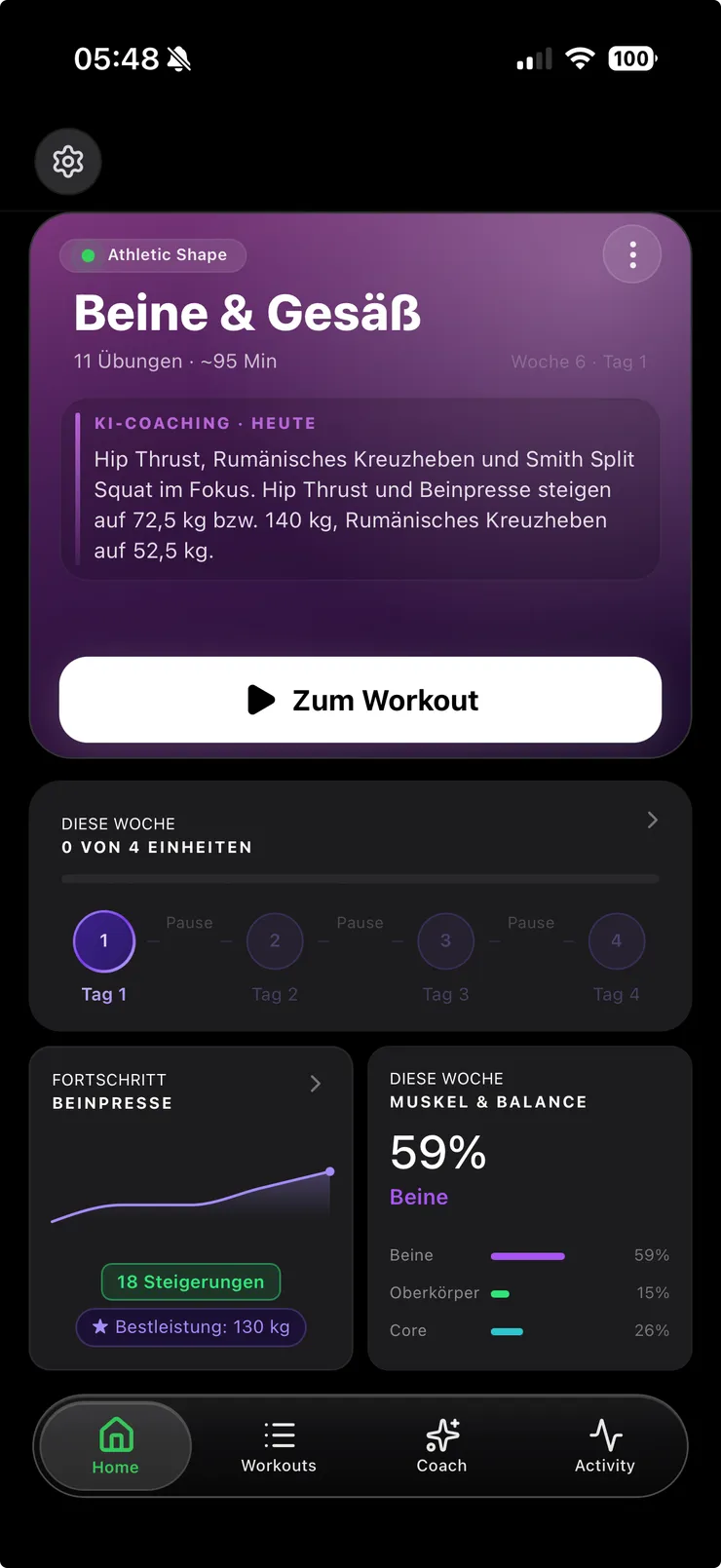
OUR APPROACH AT 10 REPSAt 10 Reps, deloads are built into the training logic, not bolted on as a separate extra. Load, performance, and fatigue are tracked over time and adjusted once training effectiveness starts to fade — not only once stagnation is obvious.
You don't have to decide yourself when a deload is needed. 10 Reps tracks performance and fatigue patterns and reduces load in a targeted way when easing off makes sense. That way, training stays effective without unnecessary setbacks or overload.
Conclusion: Easing off is part of progress
Deload weeks are a precondition for sustainable muscle growth, not a step backward. If you only ever increase load and never deliberately reduce it, you limit your own development.
Progress happens where training is managed not just intensely, but intelligently.
Continue reading


Knowledge is the start.
The plan does the rest.
Everything we write about here — progression, recovery, structure — is built right into the app. 5 questions, and your first plan is ready.
Download on theApp Store