Muscle Growth Doesn't Stall by Accident
If you train consistently and still aren't progressing, you're rarely doing too little. Stagnation doesn't happen because training stops - it happens because training is viewed in isolation.
 10 Reps Editorial
- 1Regular training without a clear progression logic maintains the status quo instead of building on it.
- 2More volume isn't automatically better training - without deliberate management, it swings between randomness and constant overload.
- 3Judging training only session by session, instead of over several weeks, means stagnation is usually noticed only after it's already set in.
If you train consistently and still aren't progressing, you're rarely doing too little. Three to four sessions a week, clean execution, showing up at the gym reliably — all of that is usually already in place. What's missing isn't effort. It's structure.
Stagnation doesn't happen because training stops. It happens because training is viewed in isolation.
Training without a system stays ineffective
In the first few months, almost any training plan works. New stimuli produce adaptation, strength climbs, muscles respond visibly. As training time adds up, that changes: your body learns to process the load. What used to work becomes normal.
If training then continues unchanged, you hit a plateau — not from laziness, but from a lack of development.
Regular training without clear progression logic maintains the status quo — it doesn't build on it.
Volume isn't an end in itself
More training isn't automatically better training. Many people increase their volume without realizing it: more sets, more exercises, more sessions. At the same time, it's unclear whether that volume can still be recovered from.
The result isn't visible overtraining — it's a gradual decline in performance. Or the opposite happens: volume stays constant even though your body has long needed more.
Without deliberate volume management, training swings between randomness and chronic overload. Both prevent progress.
Progress happens over time — not per session
Many people judge training in isolation: better than last week, or not. That view falls short. Muscle growth doesn't happen session by session — it happens over weeks of soundly applied stimuli.
Without a time-based context, key questions stay unanswered:
If you only compare individual sessions, you usually only notice stagnation once it's already set in.
Fatigue gets ignored — until it holds you back
Many training plans know only one direction: forward. Load stays consistently high, and no deloading ever happens. The result isn't a crash — it's a gradual loss of performance capacity.
Training still feels "hard," but it no longer builds you up. Your body stays stuck in maintenance mode.
Without deliberately managing fatigue, training turns into chronic strain instead of a developmental stimulus.
Switching plans is no substitute for structure
A plateau often triggers knee-jerk action. The plan gets swapped, new exercises get added, the whole system changes — before it's even clear what actually stopped working.
Muscle growth needs repetition, comparability, and time. Constant changes create motion, but no direction.
Progress can only be assessed if a system stays stable.
Muscle growth needs structure
Most plateaus can't be solved by training harder. They happen because training isn't thought about over time. Structure is missing, load isn't tracked, and development isn't made visible.
Muscle growth works reliably when training is part of a system — not just a sequence of individual sessions.
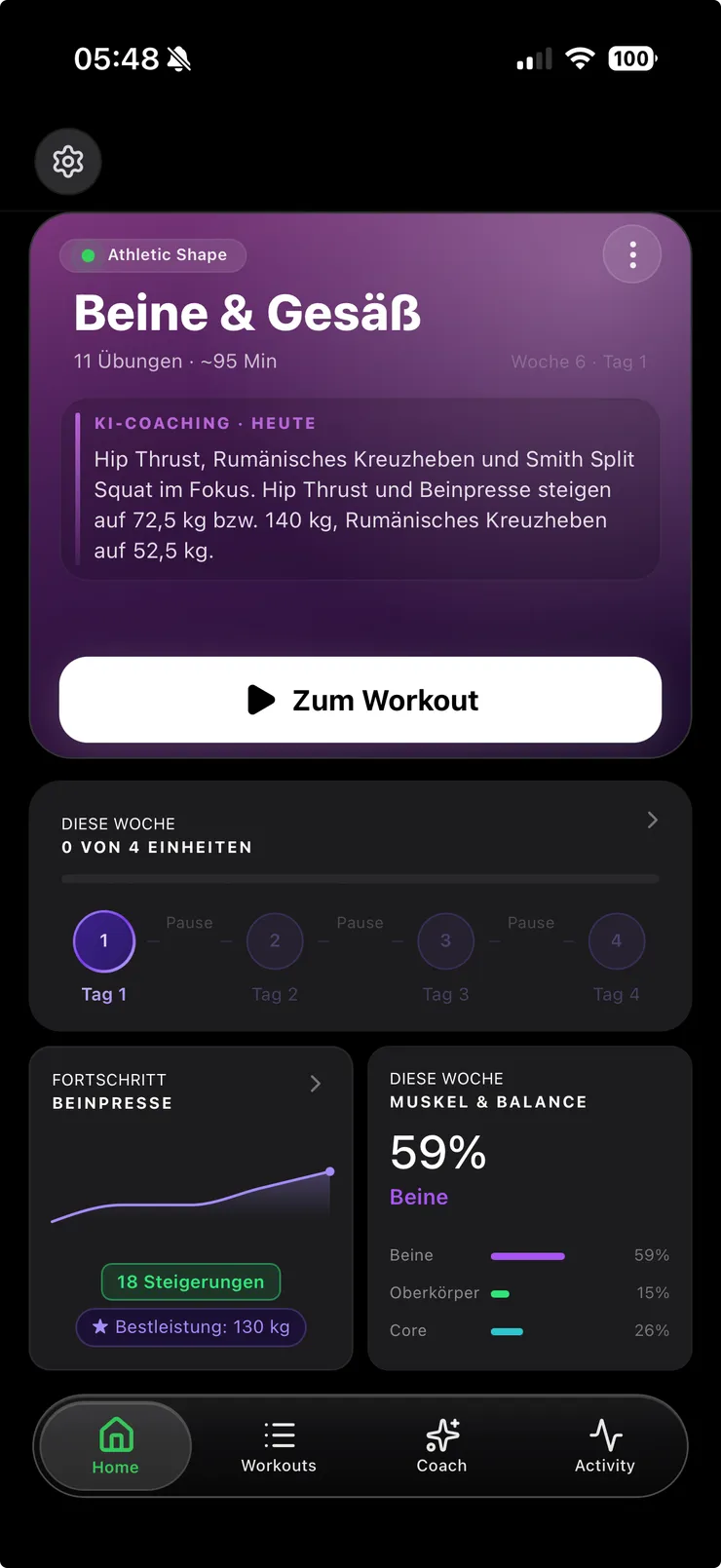
OUR APPROACH AT 10 REPS10 Reps treats muscle growth as a process. Training is planned across weeks, load is managed deliberately, and progress gets tracked. You don't train harder — you train smarter.
You don't have to keep making new decisions or interpreting your own data. The system shows you which session makes sense right now — and why.
That's how progress happens: not by chance, but through structure.
Conclusion
Stagnation isn't failure. It's a signal.
A sign that training has stopped developing and is just happening. Muscle growth stays reliable when training is built regularly and systematically.
Continue reading


Knowledge is the start.
The plan does the rest.
Everything we write about here — progression, recovery, structure — is built right into the app. 5 questions, and your first plan is ready.
Download on theApp Store