Recovery in Strength Training - Why Rest Is Part of the Plan
If you train regularly, you usually think in terms of load: more weight, more sets, more intensity. Progress becomes visible when performance goes up.
 10 Reps Editorial
- 1Anyone training 3-4 times a week in a structured way generally needs at least 48 hours before a heavily worked muscle group is fully capable again.
- 2Insufficient recovery rarely shows up abruptly - it creeps in through stagnating performance, worse sleep, and declining motivation.
- 3Recovery covers more than soreness fading: muscular, neural, hormonal, and psychological restoration are all part of it.
If you train regularly, you usually think in terms of load: more weight, more sets, more intensity. Progress becomes visible when performance goes up. Less visible is what actually makes that progress possible in the first place — recovery.
Especially for people who make strength training a consistent part of their life, recovery becomes a decisive factor. Not as a break from training, but as an active part of a workable plan.
Without sufficient recovery, there's no sustainable muscle growth — even with high training discipline.
What recovery in strength training really means
Recovery is more than sore muscles fading away. It covers restoration on several levels:
Training creates a stimulus. Adaptation happens during the recovery phase. If that phase is permanently cut short or ignored, your body stays in a state of cumulative fatigue — and progress becomes less likely. Far from opposing hard training, recovery is what makes it pay off.
How much recovery makes sense?
That depends on training volume, intensity, training level, and everyday life. If you train 3-4 times a week with structure, a heavily loaded muscle group typically needs at least 48 hours before it's fully capable again.
At the same time, complete "recovery" isn't an absolute requirement. Muscle growth doesn't require perfect freshness — just enough restoration to train with quality again.
What matters isn't maximum recovery — it's sufficient load tolerance.
How do you spot insufficient recovery?
Insufficient recovery rarely shows up abruptly — it creeps in:
Often, training intensity gets pushed even higher at this point — on the assumption that more effort is the solution. In many cases, though, the stimulus isn't too low. The recovery is too short.
Recovery is more than a deload
Deload weeks are a structured tool for deliberately reducing fatigue. But recovery starts earlier than that. It touches on:
A training plan that accounts for recovery distributes load deliberately and prevents chronic overload. It doesn't just think in sessions — it thinks in weeks and cycles. This kind of deliberate planning becomes more important as you get older or as everyday stress increases. Recovery isn't a weakness - treat it as a strategic factor instead.
Why many people underestimate recovery
Recovery is invisible. It doesn't produce PRs, numbers, or direct wins. And yet it works quietly — but consistently.
If you think exclusively in terms of performance gains, you often ignore the conditions that make those gains possible in the first place. Muscle growth comes from the interplay between stimulus and recovery, not from training sessions alone. Structured training planning accounts for both sides, not just the visible one.
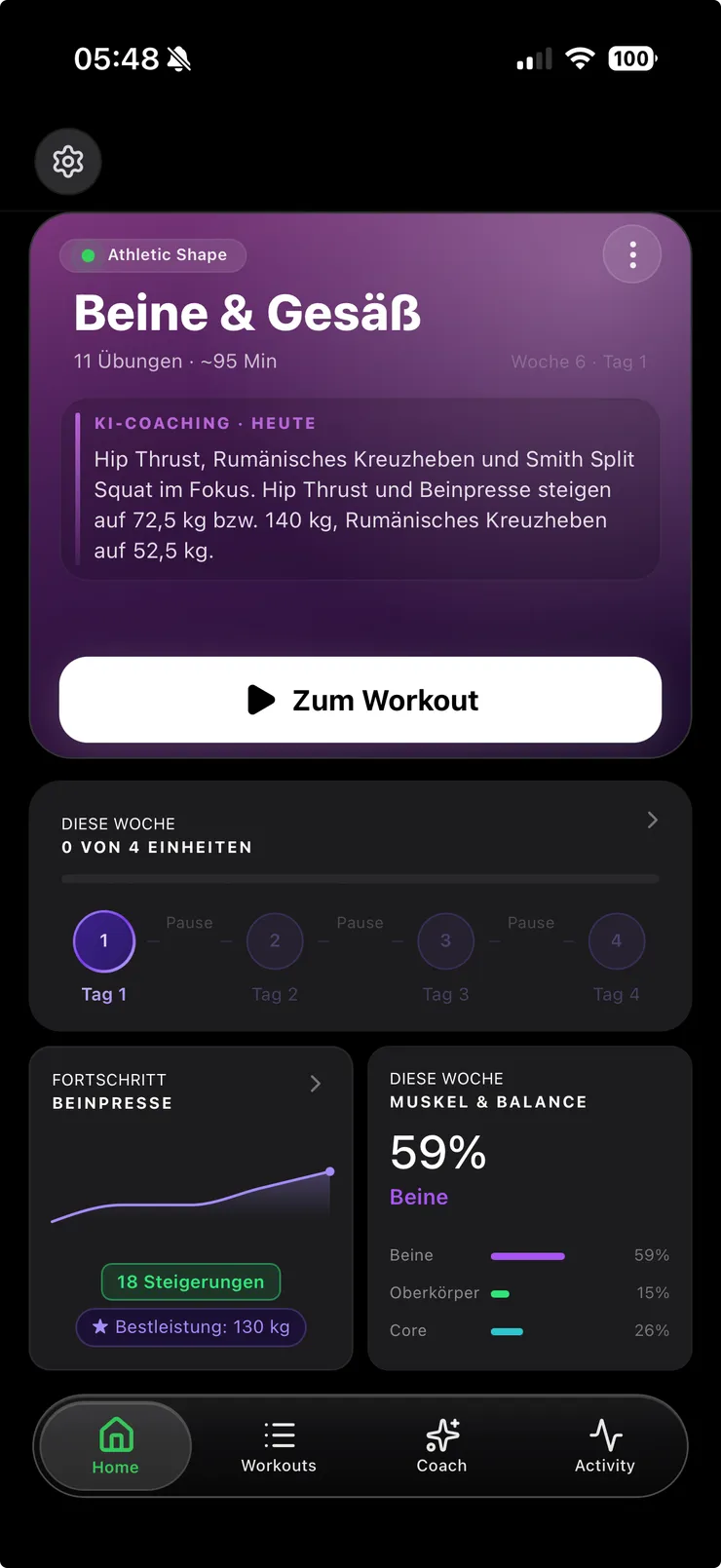
OUR APPROACH AT 10 REPSAt 10 Reps, recovery is built into the plan from the start, not tacked on as an afterthought. Training volume, intensity, and frequency are considered together. Load is distributed so that development stays possible — without the constant pressure to max out every session.
You don't have to analyze yourself whether your body has recovered enough or whether an adjustment makes sense. The system tracks your training development and factors in performance, fatigue, and timing. That way, training stays demanding but sustainable in the long run.
Conclusion: Progress happens between sessions
Muscle growth doesn't happen only during training — it happens in the phase afterward. Recovery isn't a step back from progress - it's what makes progress possible in the first place.
If you deliberately build recovery into your training plan, you don't just gain performance — you gain stability and sustainability. Strength training doesn't become less intense as a result. It becomes more intelligently organized.
Continue reading


Knowledge is the start.
The plan does the rest.
Everything we write about here — progression, recovery, structure — is built right into the app. 5 questions, and your first plan is ready.
Download on theApp Store