Tricep Dips: Form, Benefits, and Common Mistakes
Dips are the only true compound exercise among the arm exercises - and the most demanding to execute cleanly. Here's how to do them for real triceps focus without straining your shoulders.
 10 Reps Editorial
Dips are the only true compound exercise among the four arm exercises from our overview article "The 4 Best Exercises for Strong Arms" - instead of a single joint, your elbows and shoulders work together here, and instead of a cable stack, you're moving your own bodyweight. That makes the exercise effective, but also more demanding on technique. Here we go deeper: how do you actually perform tricep dips correctly, why do they work so comprehensively - and which mistakes hold back your progress or strain your shoulders unnecessarily?
- 1Starting position:
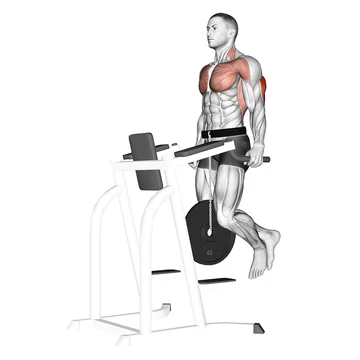
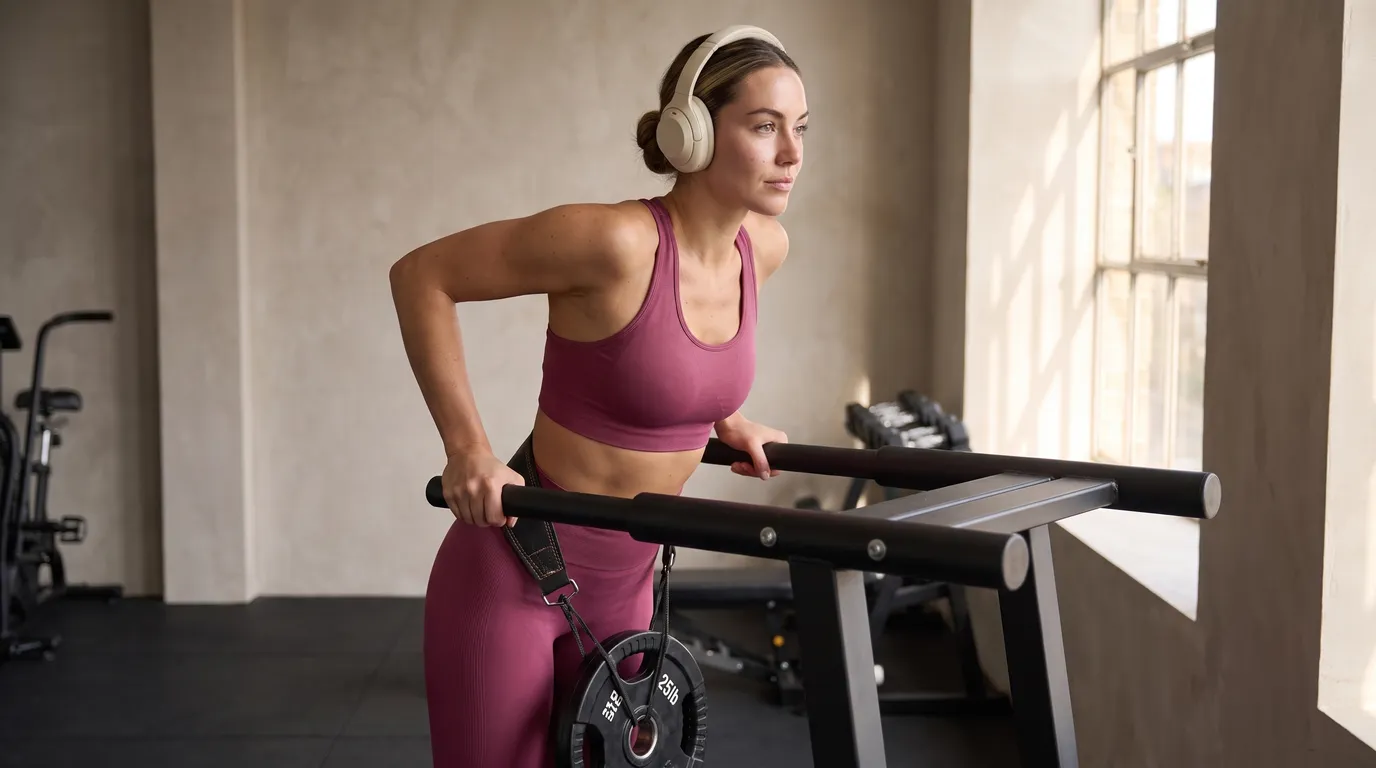
Push yourself up on the dip bars with your arms extended. Shoulders actively pulled down, not hiked up toward your ears. Keep your torso as upright as possible, elbows pointing back and staying close to your body.
1Starting position: Push yourself up on the dip bars with your arms extended. Shoulders actively pulled down, not hiked up toward your ears. Keep your torso as upright as possible, elbows pointing back and staying close to your body. - 2Downward movement:
Lower under control until your upper arms are roughly parallel to the floor - no deeper, to avoid unnecessary strain on the shoulder.
2Downward movement: Lower under control until your upper arms are roughly parallel to the floor - no deeper, to avoid unnecessary strain on the shoulder. - 3Brief turnaround at the bottom:
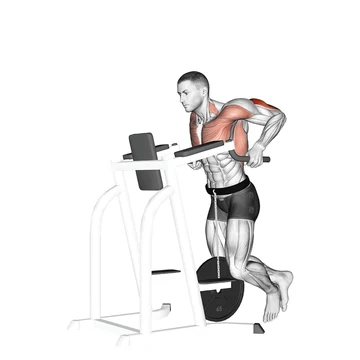
Without bouncing or rocking at the lowest point.
3Brief turnaround at the bottom: Without bouncing or rocking at the lowest point. - 4Upward movement:
Press back up actively until your arms are extended again, without locking your elbows out completely at the top.
4Upward movement: Press back up actively until your arms are extended again, without locking your elbows out completely at the top. - 5Breathing:
Inhale on the way down, exhale on the way up.
5Breathing: Inhale on the way down, exhale on the way up.
For triceps focus, an upright torso with your elbows kept close to your body is what matters most. If you deliberately want to emphasize the chest more, lean your torso noticeably further forward instead and let your elbows flare out a bit wider - that's a different, equally common variation of the exercise, but a different focus than the one described here.
Why this exercise is so effective
Dips primarily work the triceps brachii across all three heads, along with the lower portion of the chest (pectoralis major) and the front of the deltoid as supporting muscles - with an upright posture putting noticeably more emphasis on the triceps than other variations.
Three reasons dips are a staple of strength training:
Common mistakes
Variations
Sets and reps
Because dips are a bodyweight exercise, the right rep count depends more on your own strength level than it does for exercises with freely selectable weight. If you can't yet manage 8-10 clean reps, you'll typically get more out of the assisted or bench variation than jumping straight to the full exercise. If you can do significantly more, it makes sense to add weight to stay in the established muscle-building range of roughly 6-12 reps across 3-4 sets, with 1-2 reps left in reserve at the end of each set (RIR 1-2).
OUR APPROACH AT 10 REPSIn the 10 Reps app, dips - including the assisted and bench variations - are part of several training plans, including push-focused and upper-body-focused programs. The ProgressionEngine doesn't lock reps or added weight in place - it adjusts them based on your feedback from the last session. Train consistently and cleanly, and the load goes up; need more recovery, and you get it, without the plan grinding to a halt.
Built-in deload weeks also make sure load gets reduced automatically on a regular basis, so you don't have to keep track of that yourself.
Conclusion
Dips are the most demanding arm exercise, but also the most versatile - using your own bodyweight, a large range of motion, and genuine compound-exercise effects on the triceps, chest, and shoulders.
An upright posture, elbows kept close to your body, and controlled depth to the parallel upper-arm position are the three levers that determine both triceps focus and shoulder health.
Part of our arm-exercises series - discover more essential arm exercises here: The 4 Best Exercises for Strong Arms.
Continue reading
Knowledge is the start.
The plan does the rest.
Everything we write about here — progression, recovery, structure — is built right into the app. 5 questions, and your first plan is ready.
Download on theApp Store