Cardio Before or After Strength Training? Why Zone 2 Afterward Works Better
Strength before cardio is the better order - especially if your strength performance matters to you. Zone 2 afterward is a useful addition, but not a shortcut to more fat loss.
 10 Reps Editorial
"Cardio Isn't Enough Anymore" covered why strength training can't replace an endurance session, and vice versa. The logical follow-up question: if both make sense, in what order? And what does adding 15 to 20 minutes of easy Zone 2 cardio after strength training actually get you?
Strength before cardio is the better order - especially if your strength performance matters to you. Zone 2 afterward is a useful addition for your cardiovascular system and recovery, but not a shortcut to more fat loss. That's decided elsewhere: by your calorie deficit, not by training order.
What Zone 2 actually means
Zone 2 is a low, easily sustainable cardio intensity - noticeably easier than intense interval training, but not a casual stroll either. The practical test: you can still hold a conversation, but you can no longer comfortably sing. Perceived effort is roughly 3 to 4 out of 10.
Physiologically, Zone 2 sits in the range where the body draws the highest proportion of its energy from fat - in trained individuals, roughly between 59 and 64 percent of maximum oxygen uptake, typically lower in untrained people. That's a statement about the fuel mix during exercise, not a fixed heart-rate percentage. For practical purposes, the talk test is entirely sufficient.
Why the order actually matters
Strength and endurance training can somewhat blunt each other when both are combined regularly - known in exercise science as the interference effect. For a single session with strength training plus a modest Zone 2 block afterward, this effect is small in practice - but the order within the session still plays a measurable role.
For lower-body strength performance, the picture is clear: strength first, then endurance, produces significantly greater strength gains than the reverse order. The advantage shows up especially clearly in women, in older trainees, and in training programs lasting more than eight weeks. For pure endurance performance, on the other hand, order makes no measurable difference - it doesn't matter what comes first.
Physiologically, that makes sense: doing an endurance session first means going into strength training with already-fatigued muscles and partly depleted glycogen stores - and strength performance suffers as a direct result. Training first with full reserves and adding Zone 2 afterward gets you the strength session at its best quality, while demonstrably losing nothing on the endurance side.
What Zone 2 afterward actually gets you - and what it doesn't
A persistent myth surrounds this topic: that Zone 2 cardio after strength training triggers "optimal fat burning" and is therefore especially effective for weight loss. The first part is true in a narrow, physiological sense - in this moderate range, the body draws a larger share of its energy from fat oxidation than during hard intervals. Because glycogen stores are already somewhat depleted after strength training, this effect is even amplified further.
The second part - that this automatically leads to more body fat loss - is oversimplified. If the calories burned through training get replaced through food, fat oxidation doesn't increase over a full 24 hours - in some cases it even drops slightly. Which fuel gets burned during those 20 minutes of Zone 2 is secondary to body fat loss over weeks and months. What matters is whether there's a calorie deficit by the end of the week - not which energy source it came from during a specific training phase.
What Zone 2 after strength training does actually deliver:
What this means for your practice
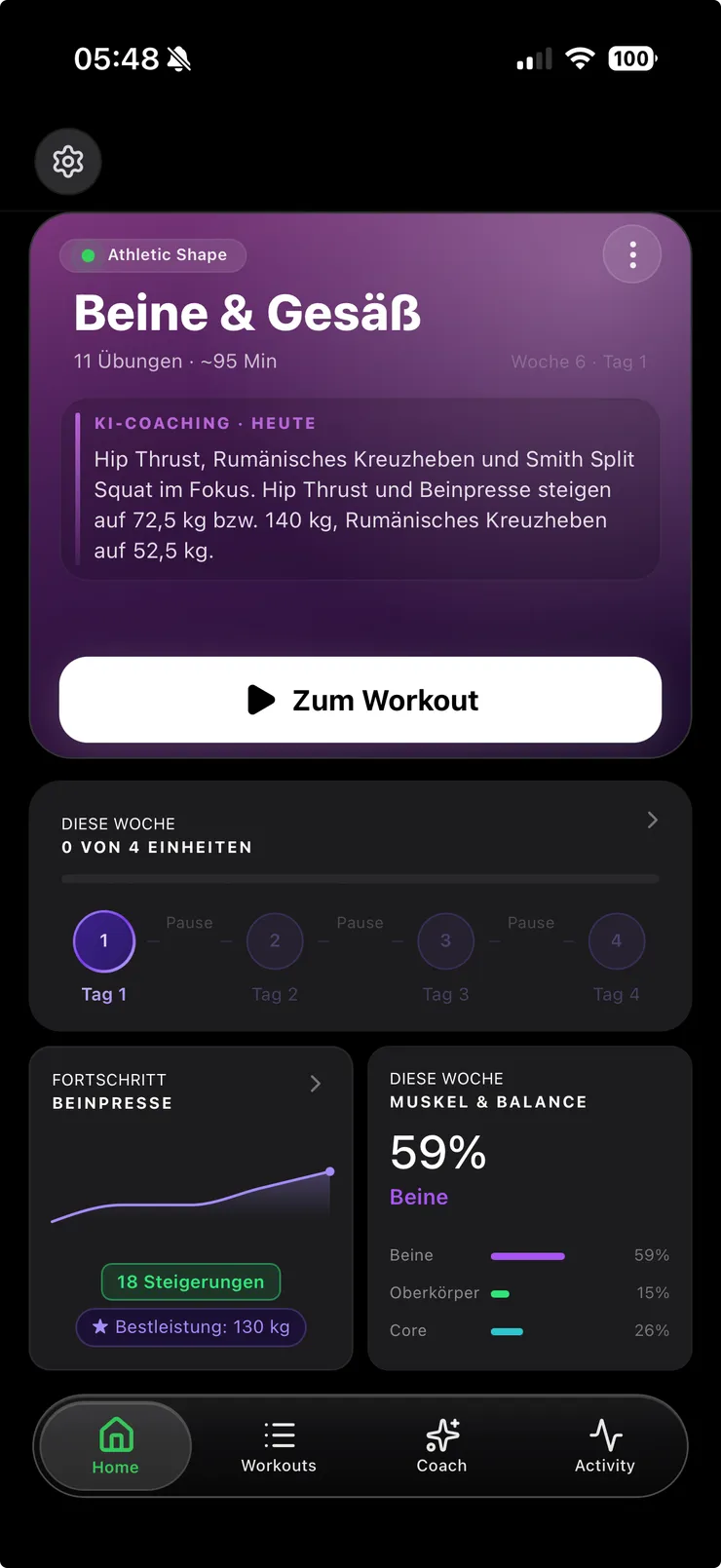
OUR APPROACH AT 10 REPSAt 10 Reps, strength training stays the foundation - for exactly the reason the research on training order confirms: strength performance is best when it starts with full reserves, not after. In some training plans, a LISS session (Low Intensity Steady State, i.e. low-intensity endurance work like Zone 2) is already built in as a fixed finisher - it automatically follows the strength work, not the other way around.
What the app deliberately doesn't promise: that a specific cardio order "optimizes" your fat burning. The ProgressionEngine makes sure your strength training keeps moving forward - that stays the most reliable lever you can directly control.
Conclusion: Order for strength, energy balance for fat
Strength before cardio isn't an arbitrary rule - it protects training quality exactly where strength training delivers the most. Zone 2 afterward is a good addition for your cardiovascular system and recovery, but not a turbo for fat burning.
That gets decided by energy balance over days and weeks, not in the 20 minutes after your last set.
Continue reading


Knowledge is the start.
The plan does the rest.
Everything we write about here — progression, recovery, structure — is built right into the app. 5 questions, and your first plan is ready.
Download on theApp Store