Exercise Order in Strength Training - Why Sequence Isn't Random
Same exercises, same weights, same number of sets - and yet a workout delivers more when the order is right.
 10 Reps Editorial
- 1Exercises done at the start of a training session benefit the most - order makes a measurable difference for strength gains, but barely any for pure muscle growth.
- 2Dynamic warm-ups demonstrably improve subsequent jump and speed power without slowing down the strength work that follows - unlike long, static holds right beforehand.
- 3As fatigue builds, the number of possible reps at the same weight drops - every exercise that comes later in a session automatically gets less effective training volume, even with identical programming.
Same exercises, same weights, same number of sets - and yet a workout delivers more when the order is right. The sequence in which exercises appear within a session isn't a minor detail - it directly shapes what the training actually delivers.
Warm up first - not negotiable
The first block of every session should always be the warm-up - short, dynamic movements instead of long, static holds. Dynamic warm-ups prepare joints and the nervous system in a targeted way and demonstrably improve subsequent jump and speed power, without slowing down the strength work. Skip this step, and you head into the session's most demanding exercises with a cold system - exactly where clean technique matters most.
Main lifts first - while strength is still fresh
The biggest, most technically demanding exercises belong at the start, right after the warm-up. The reason is simple and well documented: exercises performed at the beginning of a session benefit the most from training - regardless of whether it's a compound movement like the squat or a more isolated exercise. Whatever comes first gets the biggest strength gain.
There's a simple physiological reason for this: as fatigue builds, the number of possible reps at the same weight drops - every exercise that comes later in the session automatically gets less training volume, even with identical programming. For muscle growth, the order between main and accessory exercises barely matters - the effect shows up mainly in strength performance, not in pure hypertrophy.
Accessory work later - where fatigue hurts less
More isolated exercises with lower technical demands tolerate fatigue better than complex compound movements. A biceps exercise at the end of a session with already-tired arms isn't a problem - the same fatigue before a heavy squat, on the other hand, would noticeably limit both technique and the weight you can move. Putting accessory exercises at the end isn't a fallback - it's the logical consequence of putting what needs the most attention first.
What this means for your practice
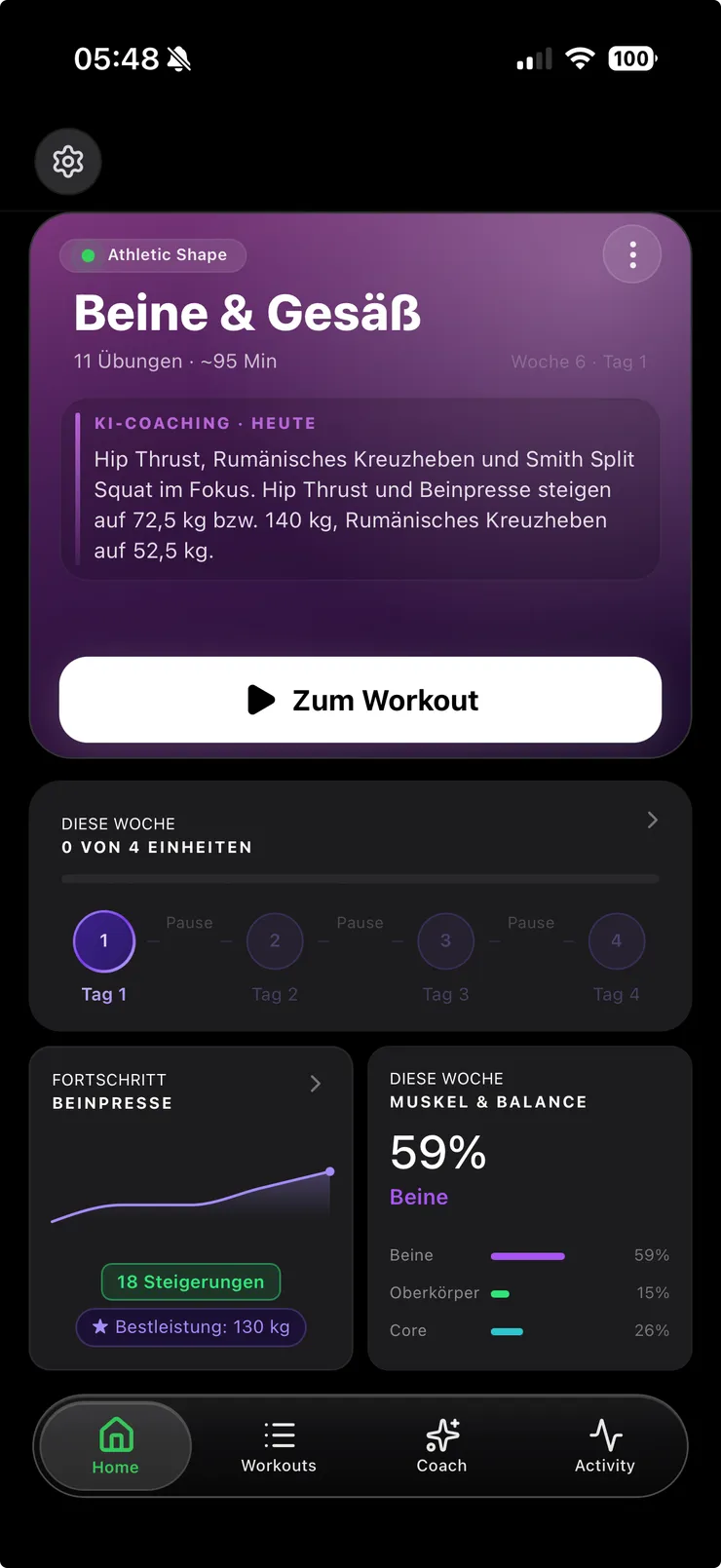
OUR APPROACH AT 10 REPSAt 10 Reps, this order isn't a tip you have to apply yourself - it's built into every workout. Every session is structured into blocks of warm-up, main lifts, and accessory work, in exactly the sequence that makes the most sense for technique and strength gains.
You don't have to remember what comes first - the app has already worked out the order for you.
Conclusion: Order isn't a detail, it's a strategy
The same exercises deliver different results depending on when they happen within a session.
Warm-up first, the most important and demanding exercise right after, accessory work last - this order isn't a formality, it's making the most of when your body can perform best.
Continue reading

Knowledge is the start.
The plan does the rest.
Everything we write about here — progression, recovery, structure — is built right into the app. 5 questions, and your first plan is ready.
Download on theApp Store