Lunges: The Most Common Mistakes - and How to Avoid Them
Lunges are one of the most accessible leg exercises - no equipment needed. That simplicity is exactly why small mistakes creep in that cost effect or strain the knee without you noticing.
 10 Reps Editorial
Lunges are one of the most accessible exercises from our overview article "The 8 Best Leg Exercises for Stronger Legs" - no equipment needed, doable in practically any setting. That simplicity is exactly why mistakes creep in that barely register but cost effect or put unnecessary strain on the knee. Here we go deeper: correct form, the most common mistakes - and how to fix them.
- 1Starting position:
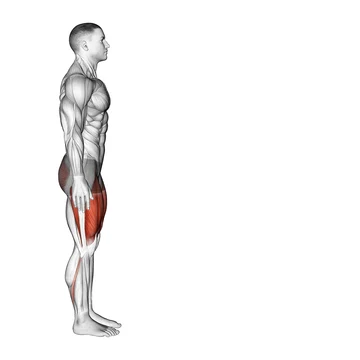
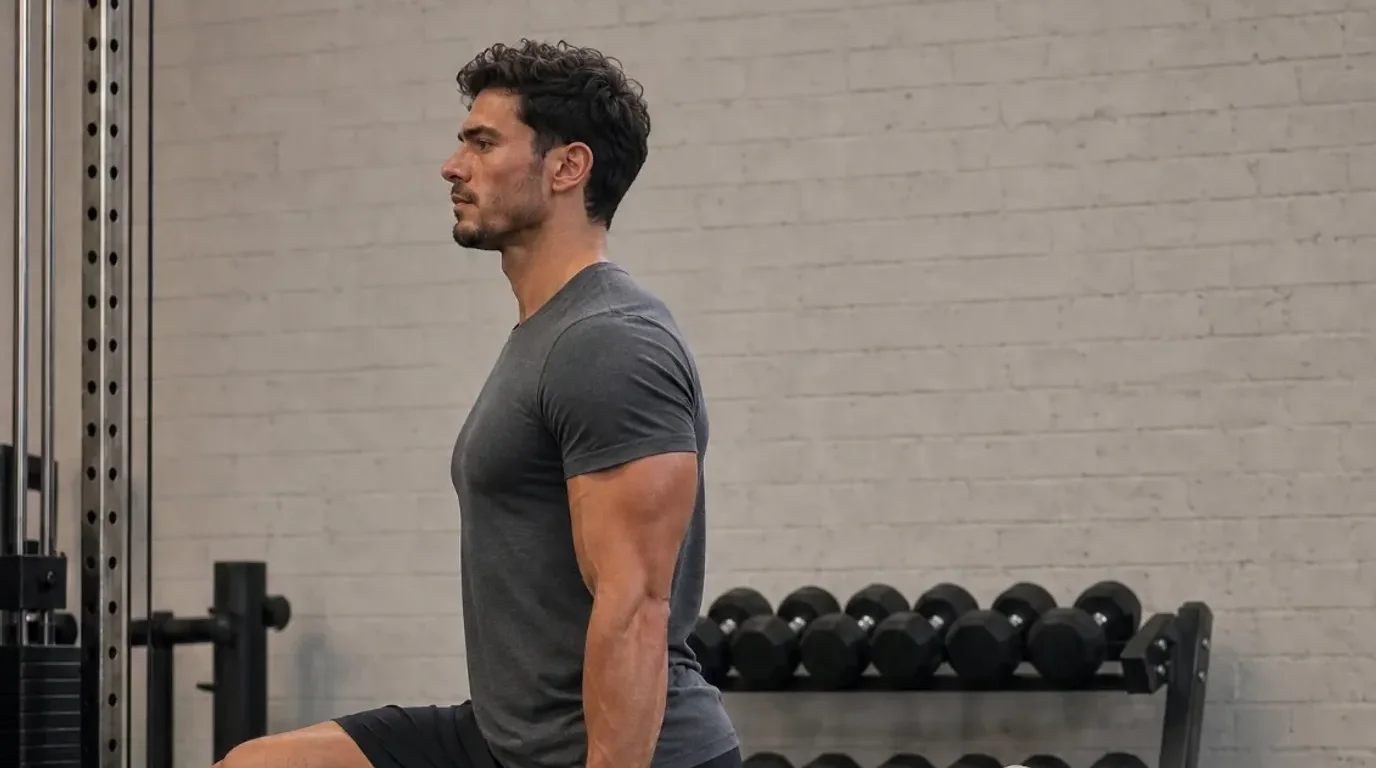
Hip-width stance, torso upright, core slightly braced.
1Starting position: Hip-width stance, torso upright, core slightly braced. - 2Step forward:
Take a big step forward, shifting your weight onto the front leg under control.
2Step forward: Take a big step forward, shifting your weight onto the front leg under control. - 3Lowering:
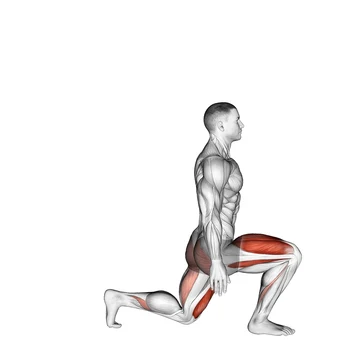
Lower your rear knee toward the floor under control, until it's just above the ground. Your front knee stays over your ankle, not in front of it.
3Lowering: Lower your rear knee toward the floor under control, until it's just above the ground. Your front knee stays over your ankle, not in front of it. - 4Pressing up:
Push back to standing through your front heel - either back to the starting position, or, for walking lunges, straight into the next step.
4Pressing up: Push back to standing through your front heel - either back to the starting position, or, for walking lunges, straight into the next step. - 5Breathing:
Inhale on the way down, exhale on the way up.
5Breathing: Inhale on the way down, exhale on the way up.
Step length is the most important lever: too short a step pushes the front knee too far forward instead of letting the hip do enough of the work.
Why this exercise is so effective
Lunges primarily work the quadriceps and glutes of the front leg, with the core and balance muscles acting as stabilizers.
Three reasons lunges are so valuable in leg training:
Common mistakes
Variations
Sets and reps
For lunges, a range of roughly 3 sets of 10-12 reps per leg has become the established standard in training practice, with 1-3 reps left in reserve at the end of each set (RIR 1-3). This, too, is a general guideline, not a rigid rule.
OUR APPROACH AT 10 REPSIn the 10 Reps app, lunges are part of several training plans, including lower-body and bodyweight programs. The ProgressionEngine doesn't lock reps or added weight in place - it adjusts them based on your feedback from the last session. Train consistently and cleanly, and the load goes up; need more recovery, and you get it, without the plan grinding to a halt.
Built-in deload weeks also make sure load gets reduced automatically on a regular basis, so you don't have to keep track of that yourself.
Conclusion
Lunges are simple in concept, but prone to small mistakes with real consequences.
An adequate step length, a front knee that stays over the foot, and an upright torso are the three levers that determine both effectiveness and knee health.
Part of our leg-exercises series - discover more essential leg exercises here: The 8 Best Leg Exercises for Stronger Legs.
Continue reading
Knowledge is the start.
The plan does the rest.
Everything we write about here — progression, recovery, structure — is built right into the app. 5 questions, and your first plan is ready.
Download on theApp Store