The 8 Best Leg Exercises for Stronger Legs
Strong legs aren't the result of a single exercise, but of a well-thought-out mix: quads, hamstrings, glutes, and calves each need their own stimulus.
 10 Reps Editorial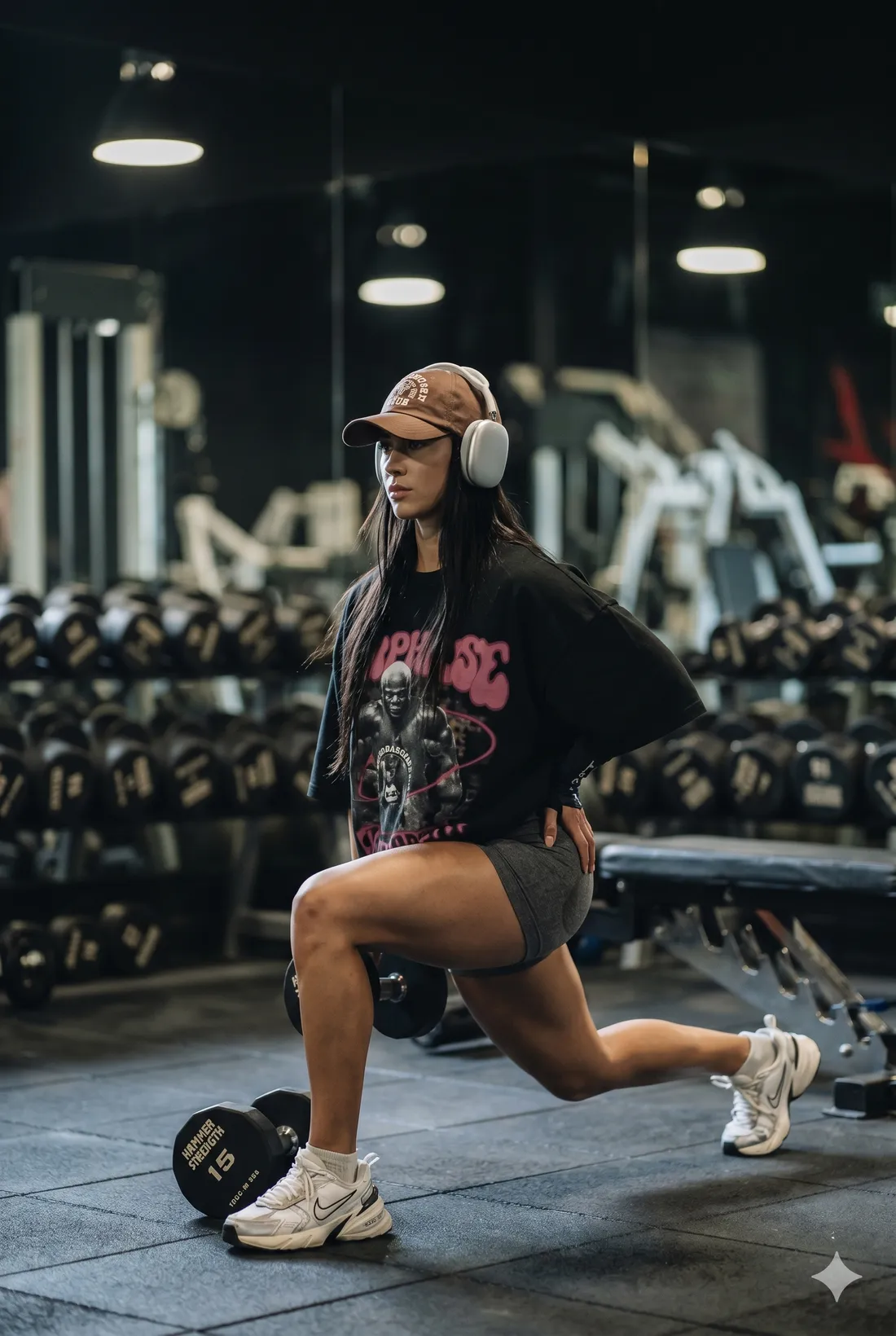
- 1Strong legs need four distinct stimuli - front and back thigh, glutes, and calves - no single exercise covers all four areas.
- 2Romanian deadlifts load the hamstrings very directly because almost only the hips move.
- 3Single-leg exercises like lunges and Bulgarian split squats even out strength differences between legs that two-legged exercises can hide.
Strong legs aren't the result of a single exercise, but of a well-thought-out mix: quads, hamstrings, glutes, and calves each need their own stimulus.
These eight exercises cover all four areas — each with the highest payoff for the effort involved.
1. Squat

The squat is the foundational exercise for the front of the thigh. It activates the rectus femoris more than most alternative exercises while also working the glutes and hamstrings. The goblet squat is a great entry point: holding a dumbbell in front of the chest instead of on the back makes it easier to stay upright and takes pressure off the lower back, without changing how the target muscles work.
Form: Feet shoulder-width apart, chest up, go deep enough in the movement to bring your thighs at least parallel to the floor — without your lower back rounding. For the goblet squat, hold the dumbbell close to your chest, elbows pointing slightly inward between the knees.
2. Romanian Deadlift

There's hardly a more effective exercise for the back of the thigh. The Romanian deadlift loads the hamstrings very directly because almost only the hips move - in the squat, lunge, or step-up, the work is spread more toward the quads and glutes.
Form: Legs nearly straight, push the hips back instead of bending the knees, keep the bar close to your legs until you feel a clear stretch in your hamstrings.
3. Hip Thrust

If you want to target the glutes specifically, the hip thrust is hard to beat. It produces higher gluteus maximus activation than the classic squat, with comparatively low knee stress. You can do it with a barbell or on a machine — both versions target the same muscle, with the machine taking on some of the stabilization work, often making it the more accessible option to start with.
Form: Upper back supported on a bench, barbell over the hips, drive the hips up until torso and thighs form a straight line. Consciously squeeze the glutes at the top. On a machine, the same movement principle applies, just with fixed guidance instead of a free barbell.
4. Lunges

Lunges train each leg individually — which exposes strength differences between left and right and evens them out over time. As a single-leg exercise, they also deliver especially high activation of the lateral glutes, which keep the hips stable.
Form: Take a big step forward, lower the back knee toward the floor with control, keep the front knee over the ankle. Perform in place or walking.
5. Bulgarian Split Squat

This single-leg relative of the squat combines the benefits of the squat and the lunge: high activation of the quads and glutes, plus the balancing effect of a single-leg exercise. More demanding on balance, but very efficient.
Form: Rear foot elevated on a bench, front leg carries most of the load, lower down until the thigh is roughly parallel to the floor.
6. Leg Press

The leg press is a joint-friendly alternative to the squat when back issues or balance make a free barbell exercise harder. It primarily works the front of the thigh, with the hamstrings noticeably contributing at a deep knee bend.
Form: Feet shoulder-width apart on the platform, knees tracking toward your toes, lower with control to a deep knee bend without your lower back lifting off the pad.

7. Machine Leg Curl
Where the Romanian deadlift works the entire hamstring in one complex movement, the leg curl isolates exactly that muscle — ideal for adding one more focused round toward the end of a session, without technique or fatigue in other muscle groups being the limiting factor.
Form: Curl with control, hold briefly at the top, extend back slowly — using momentum on this exercise noticeably reduces the training effect.

8. Calf Raise
Calves get worked constantly in everyday life and respond sluggishly to training as a result — consistent, targeted stimulus matters especially here. Standing calf raises primarily train the gastrocnemius, the visible outer calf muscle.
Form: Ball of the foot on an elevated surface, use the full range of motion — a noticeable stretch at the bottom, up onto your toes as far as possible at the top.
What this means for your training
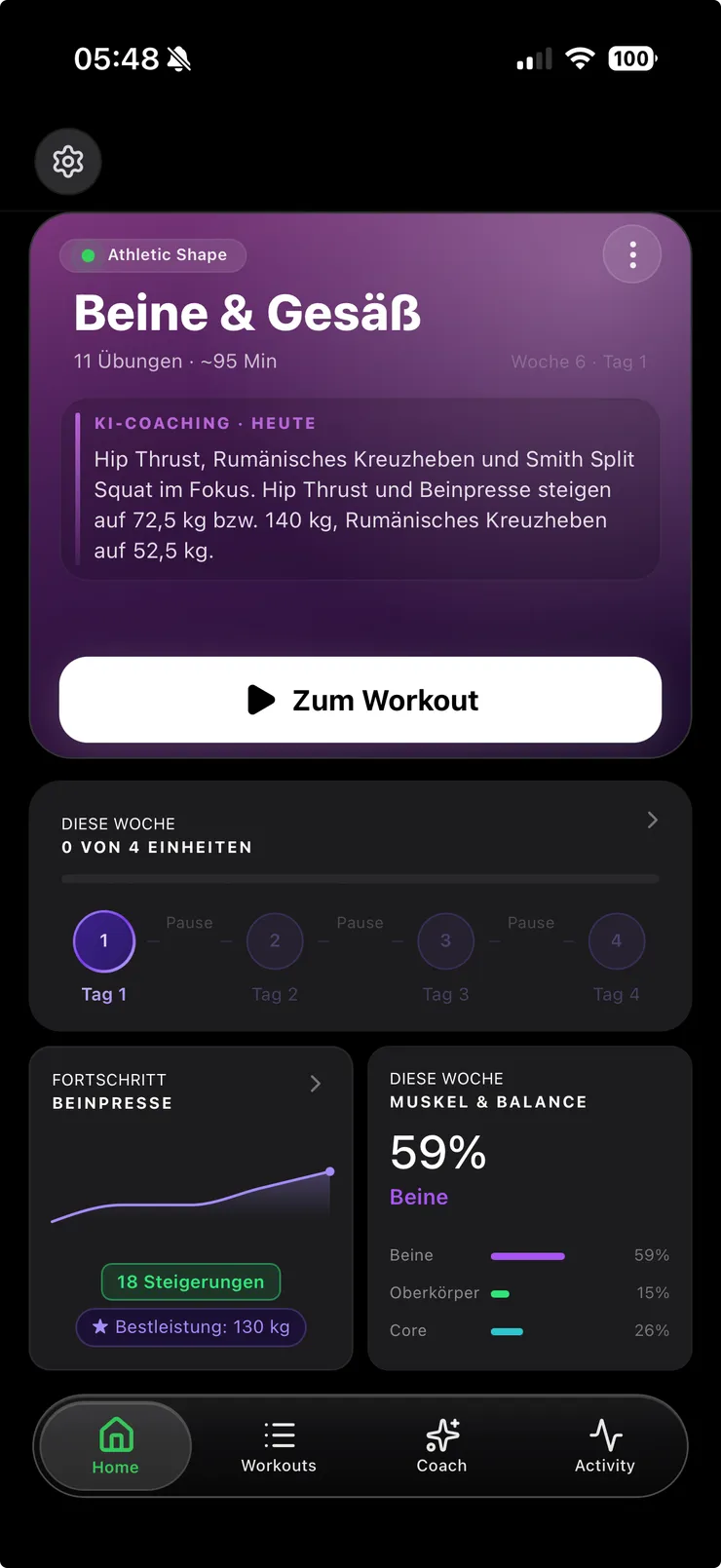
OUR APPROACH AT 10 REPSAll eight exercises from this article are part of the 10 Reps exercise catalog — trainable individually through the workout library with a "Lower" focus, or embedded in a complete training plan.
The progression engine handles the weight increases from session to session, so you can focus on clean execution instead of working out the next jump yourself.
Conclusion: Strong Legs Need Variety, Not a Miracle Exercise
There's no single "best" leg exercise — the jobs of the quads, glutes, and calves are too different for that. Together, these eight exercises cover everything needed for noticeably stronger legs.
Done cleanly and trained regularly, that's plenty for most people who train.
Continue reading
Knowledge is the start.
The plan does the rest.
Everything we write about here — progression, recovery, structure — is built right into the app. 5 questions, and your first plan is ready.
Download on theApp Store