Strength Training During Menopause - Why Building Muscle Matters More Now
Muscle and bone loss happen to everyone past a certain age - for women, menopause adds an extra push to that process.
 10 Reps Editorial
- 1During menopause, women lose on average around 2 percent of their bone mass per year, and some women lose 3 to 5 percent in the first years after their last period - in roughly a quarter of women, that loss happens noticeably faster.
- 2An 8-month study of postmenopausal women, some with reduced bone density, found high-intensity training significantly improved bone density with zero new fractures.
- 3Classic strength training, three times a week over 15 weeks, reduced hot flash frequency by an average of 43 percent in one study.
Muscle and bone loss happen to everyone past a certain age - for women, menopause adds an extra push to that process. The reason comes down to a single hormone. And that's exactly why strength training now stops being optional and becomes one of the most effective levers available.
The reason: one hormone, two problems at once
Estrogen is far more than a reproductive hormone - it actively slows the breakdown of bone and muscle. As long as levels stay stable, it acts like a shield against the natural aging process. With menopause, that level drops sharply within just a few years. The protection fades, and the breakdown processes already underway in bone and muscle noticeably speed up. That's exactly what's behind diagnoses like osteopenia or a surprisingly rapid loss of strength that many women experience for the first time in this life stage.
Muscle loss: faster than expected
Muscle mass declines continuously starting around age 30 - that applies to everyone. For women, menopause adds an extra, hormonally driven push on top: losing estrogen's protection amplifies the loss that's already happening. Even more critical: strength is lost faster than pure muscle mass - and that's the stronger risk factor for falls and reduced everyday resilience. Do nothing during this phase, and you don't just lose muscle - you lose usable strength disproportionately.
Bone density: the underestimated turning point
During menopause, women lose on average around 2 percent of their bone mass per year, and some women lose 3 to 5 percent in the first years after their last period. In roughly a quarter of women, this loss happens noticeably faster, with a correspondingly higher osteoporosis risk. The same protective mechanism is missing here too: without estrogen, the breakdown processes in bone run with less resistance.
This is exactly where strength training comes in - not as a cautious add-on, but as a targeted mechanical stimulus that actively prompts bone to push back.
Training heavy is safe - even with already weakened bones
A controlled study of over 100 postmenopausal women, some with already reduced bone density, shows just how effective this is: eight months of high-intensity training - back squats, deadlifts, overhead presses, controlled jumping impact exercises - improved bone density in the spine and femoral neck significantly more than a light home program. Despite some already-compromised vertebrae, not a single new fracture occurred in the training group. Posture even improved measurably: the typical forward curvature of the upper spine decreased more than four times as much in the training group as in the control group.
Heavy training is traditionally seen as risky for this group. The evidence says the opposite: programmed correctly, it's safe - and more effective than any cautious alternative.
Even hot flashes respond
The effect isn't limited to bone and muscle. In another study, classic strength training, three times a week over 15 weeks, reduced the frequency of hot flashes by an average of 43 percent - while the control group saw virtually no change. Strength training during menopause works not just structurally, but measurably on one of this life stage's best-known symptoms too.
What this means for your practice
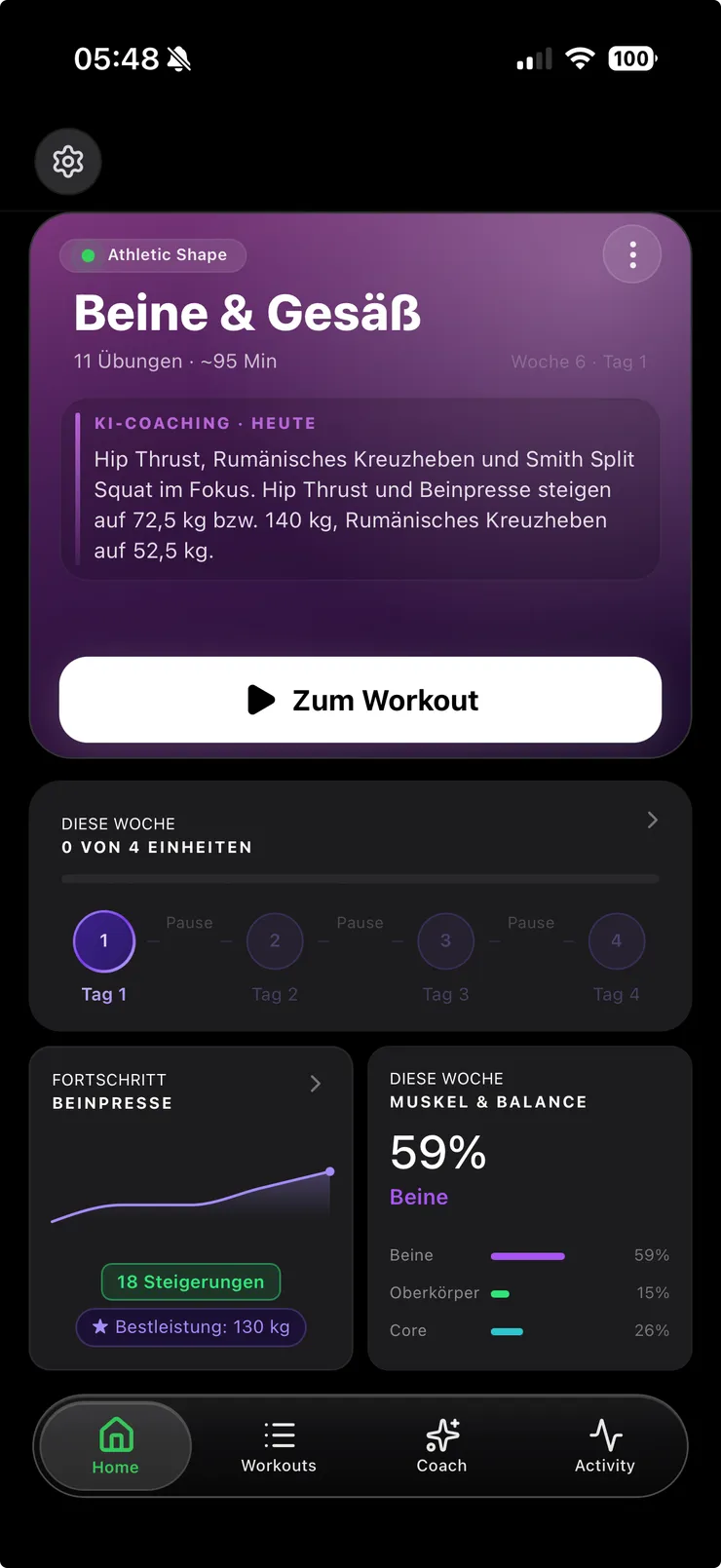
OUR APPROACH AT 10 REPSSquats, deadlifts, rows, overhead presses - exactly the exercises that do the most for bone density and muscle preservation form the backbone of 10 Reps training plans. You don't have to piece them together yourself: they come ready-structured, or you can combine them freely from the workout library.
How fast load increases isn't something you decide by feel - the ProgressionEngine handles that, step by step and traceably.
Conclusion: Train because of menopause, not despite it
Menopause isn't a reason to get more cautious about strength training - it's the reason targeted training is especially effective during this phase. Muscle and bone loss do accelerate hormonally, but the right stimulus can demonstrably slow and partly reverse that.
Start now or keep going, and you're not training against your body - you're using exactly the lever that works hardest during this phase.
Continue reading

Knowledge is the start.
The plan does the rest.
Everything we write about here — progression, recovery, structure — is built right into the app. 5 questions, and your first plan is ready.
Download on theApp Store