5 Strength Training Mistakes Women Over 40 Make
After 40, quite a bit changes in the body — muscle and bone loss accelerate, and menopause often adds an extra push on top.
 10 Reps Editorial
- 1Relying on cardio alone isn't enough after 40 - only strength training delivers the mechanical stimulus that actively preserves bone density and muscle mass.
- 2Training too light out of caution has no scientific basis - heavy, properly calibrated training is safe and more effective even with reduced bone density.
- 3The body can only use a limited amount of protein per meal for muscle building - spreading it evenly across the day makes better use of your daily target than one or two large portions.
After 40, quite a bit changes in the body — muscle and bone loss accelerate, and menopause often adds an extra push on top.
Strength training is one of the most effective levers exactly in this phase. These five mistakes hold it back most often.
1. Relying on cardio alone
Running, cycling, swimming — all valuable, but not enough on their own for bone density and muscle preservation. Only the mechanical load from strength training stimulates bone to actively counteract loss and pushes back against the accelerated muscle loss of this life stage. Anyone relying exclusively on endurance exercise is leaving exactly the lever that matters most right now unused.
2. Training too light out of caution
The worry that it's safer to train more cautiously and lighter with age is widespread — and not scientifically justified. Even with already reduced bone density: heavy, properly calibrated training is safe and more effective than any gentle alternative. Keeping weights artificially low out of misplaced caution gives up exactly the stimulus that matters most for bone and muscle.
3. Distributing protein unevenly across the day
The daily total alone isn't enough — how it's spread across meals matters too. The body can only use a limited amount of protein per meal for muscle building, and that threshold tends to be higher with age than in younger years. A breakfast with barely any protein followed by a very protein-heavy dinner makes worse use of the daily target than spreading the same amount more evenly across several meals.
4. No progressive overload
The same training plan, the same weights, month after month — a mistake that holds people back at any age, but costs especially much here. Muscle and bone growth come from a stimulus that gets bigger over time than the one before it. Without that increase, the body stays at its current level, in exactly the phase where every additional stimulus counts.
5. Underestimating sleep and recovery
Sleep disturbances are among the most common companions of menopause — and a large part of the adaptation you're training for actually happens during sleep. Treating recovery as an afterthought gives away part of the training effect without it showing up in the training itself. Especially when sleep is already more restless, it's worth planning recovery deliberately instead of leaving it to chance.
What this means for your training
OUR APPROACH AT 10 REPSSeveral of these mistakes can be avoided almost automatically with the right structure.
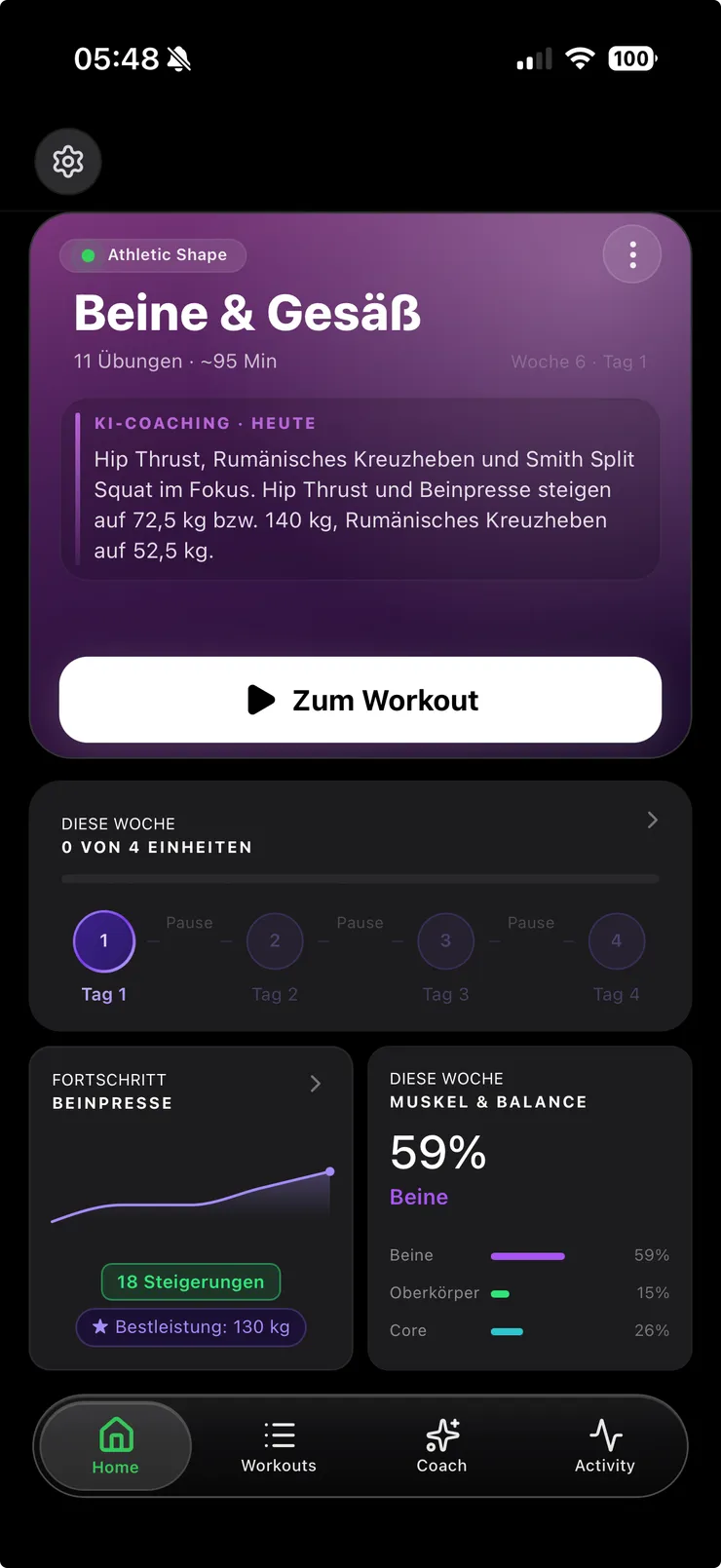
The 10 Reps progression engine makes sure the load grows traceably from session to session, instead of staying at the same level or starting too low out of uncertainty. And because every training plan is built on real compound lifts with skeletal loading, there's no room for training that unconsciously drifts toward cardio or isolation exercises alone.
Conclusion: Small Adjustments, Big Difference
None of these five mistakes is complicated to fix — but especially after 40, fixing them makes a disproportionately big difference.
Take strength training seriously, train heavy, spread protein wisely, keep progressing, and don't neglect sleep — and you've already solved the biggest brakes.
Continue reading


Knowledge is the start.
The plan does the rest.
Everything we write about here — progression, recovery, structure — is built right into the app. 5 questions, and your first plan is ready.
Download on theApp Store