5 Mistakes When Choosing a Training Plan
The wrong training plan is rarely completely useless - it just slows you down unnecessarily. These five mistakes in choosing a plan cost the most progress, and all of them are avoidable.
 10 Reps Editorial
- 1At two to three training days a week, a full-body plan covers the same training volume as a split - with less planning effort and built-in room for a missed session.
- 2A plan should be followed through to the end as designed before you even consider switching - otherwise your progress comparison practically starts from zero every time.
- 3Progressive overload - more weight, more reps, or more sets over time - is the actual engine behind strength and muscle growth, not the choice of plan itself.
The wrong training plan is rarely completely useless - it just slows you down unnecessarily. These five mistakes in choosing a plan cost the most progress, and all of them are avoidable before your first session even starts.
1. Switching to a split too early
Push-Pull-Legs or another split is often seen as the "more advanced" and therefore automatically better format - but a split without enough training days and experience behind it brings no real advantage. At two to three training days a week, a full-body plan covers the same training volume, is easier to plan, and comes with built-in room for error if a session gets missed. A split only starts paying off once more training days and more experience are in place.
2. Constantly switching between plans
Two weeks on this plan, then the next promising one from the internet - the idea that constant variety brings more progress is a persistent one. In reality, progress can only be judged cleanly if a plan is followed consistently over several weeks. Starting completely over every few weeks means practically starting the progress comparison from zero every single time.
3. Plan and available time don't match
A six-day split that realistically doesn't fit your everyday life is doomed from the start - no matter how good it looks on paper. The best plan is the one you actually stick to. A simpler three-session plan trained consistently beats an ambitious plan that collapses against reality after the second week.
4. Choosing a plan without progression
A plan that specifies exercises and weights for week 1 but leaves open how that's supposed to increase over the following weeks delivers little additional progress after the initial phase. Progressive overload - more weight, more reps, or more sets over time - is the actual engine behind strength and muscle growth. A plan without this built-in increase is really just a one-time exercise list, not a training program.
5. Copying a plan built for a different goal or level
An advanced influencer's training plan, or one from a friend with years of experience, rarely fits your own starting point. What works for someone with a different goal, training level, or training days either overwhelms or underloads you somewhere else. A plan should fit your own level and goal, not the person who originally put it together.
What this means for your training
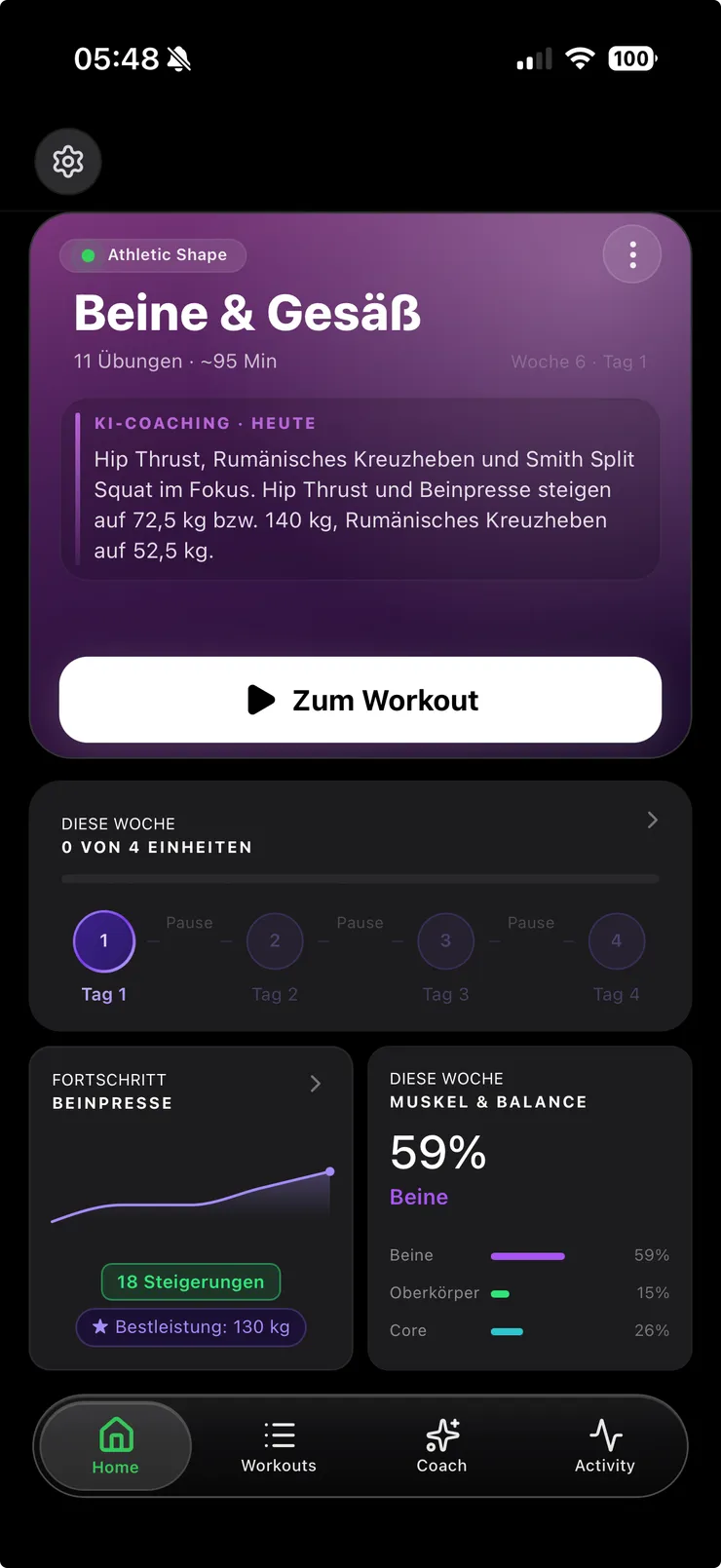
OUR APPROACH AT 10 REPSThese exact five mistakes are why 10 Reps doesn't leave plan selection up to you alone: a short onboarding questionnaire captures your training experience, goal, available training days, and focus areas, and automatically recommends a matching plan. From Gym Start as a full-body entry point to the Push & Pull Split for more experienced lifters with more time - each of the more than 20 plans is tailored to a specific starting point.
Progression is built into every 10 Reps training plan: the ProgressionEngine increases the load automatically from session to session, so no plan ever turns into a one-time exercise list.
Conclusion: The best plan is the one that fits you
The most effective training plan is rarely the most complex one, or the one currently trending - it's the one that fits your training days, your level, and your goal, and that you follow consistently.
Avoid these five mistakes, and you won't waste weeks on the wrong plan before your actual training even gets a chance to work.
Continue reading


Knowledge is the start.
The plan does the rest.
Everything we write about here — progression, recovery, structure — is built right into the app. 5 questions, and your first plan is ready.
Download on theApp Store