Push-Pull-Legs Explained - Who the Classic Split Is Actually For
Push, Pull, Legs, repeat — hardly any training split is as well-known as this one. Three words, one simple principle, and yet the question remains: is it really the best choice, or just the most familiar one?
 10 Reps Editorial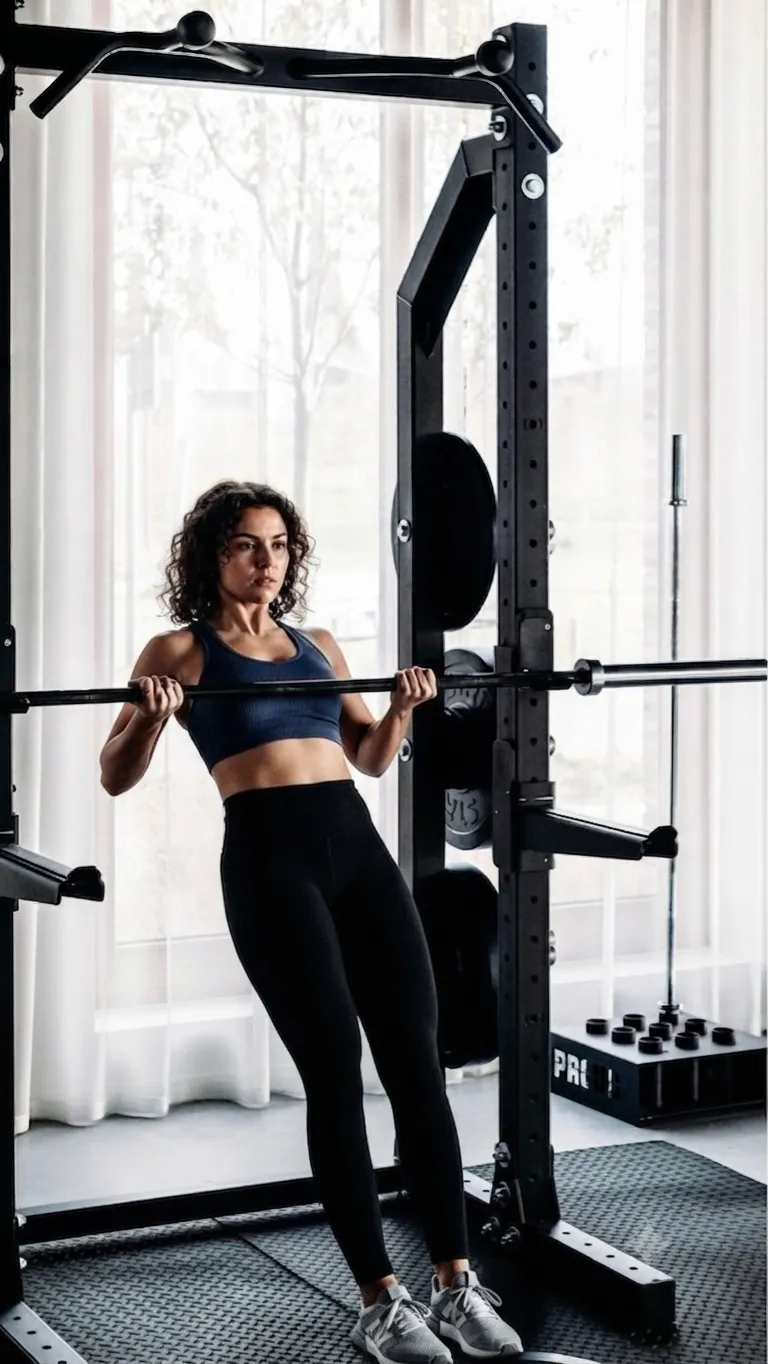
Push, Pull, Legs, repeat — hardly any training split is as well-known as this one. Three words, one simple principle, and yet the question remains: is it really the best choice, or just the most familiar one?
What Push-Pull-Legs actually is
The idea behind it is simple and clever at once: exercises get sorted by movement direction. Push covers everything that pushes — chest, shoulders, triceps. Pull covers everything that pulls — back, biceps. Legs covers the entire lower body. Muscles that work together in one movement end up in the same session, which spares those muscles on the days they're not trained and makes the plan easy to follow.
PPL can run once a week (three training days) or twice (six training days), depending on how much time and recovery capacity you have available.
What the research on training frequency actually says
Here's a correction worth making to a widespread misconception: PPL is often considered superior because each muscle gets trained twice a week instead of once. Sounds logical — but it doesn't fully hold up under closer scrutiny. When weekly training volume is kept genuinely equal, it makes little difference for muscle growth whether that volume gets spread across one, two, or three sessions a week. Frequency, then, is less a growth lever than a question of organization.
The real advantage of PPL lies elsewhere: very high weekly volume shows diminishing returns past a certain point — more sets don't automatically produce proportionally more growth, as studies comparing different weekly volumes show. But spreading your training volume sensibly across more sessions is exactly what lets you fit that volume in cleanly in the first place, without individual sessions ballooning out of control. That's the real strength of the split: more overview and manageability for high volume, not raw frequency itself.
Who PPL is actually worth it for
That also makes clear who the classic makes sense for: anyone who trains, or can train, three to six days a week regularly and is aiming for a higher weekly volume per muscle group than a single full-body session can reasonably deliver. Even the simple version — running PPL once a week, so three training days — is enough for that. The six-day version is more for people who already spend a lot of time in the gym and want to push their volume further. That applies mainly to somewhat experienced lifters who've already got their technique down and want to add targeted stimulus.
For beginners, or anyone training two to three days a week, PPL is often needlessly complicated. A full-body plan achieves similar results at the same volume — with less planning overhead and without the risk of skipping an entire muscle group for a week if you miss a session.
What this means for your training
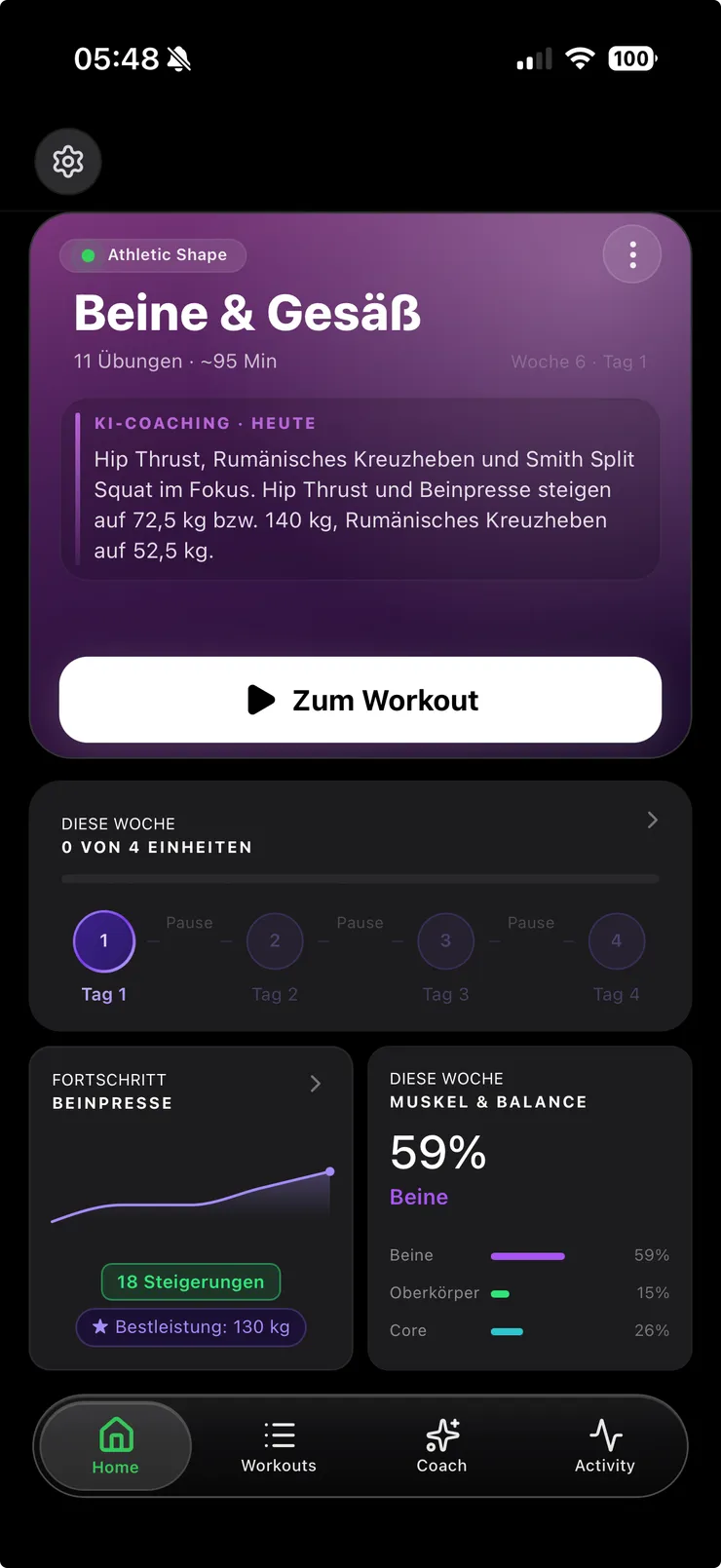
OUR APPROACH AT 10 REPSAt 10 Reps, both paths exist, matched to your training level.
For getting started, full-body plans like Gym Start or Total Body Strength are ready to go — simple, plannable, no split logic to keep track of. Bring more experience and train more often, and the Push & Pull Split plan delivers the classic PPL structure, complete with automatic progression through the progression engine.
Don't want to commit to a multi-week plan? The same logic is available individually in the workout library too — filter specifically by focus, with dedicated workouts for Upper Push, Upper Pull, and Lower. That lets you assemble PPL on the fly, session by session, with no fixed plan required.
Conclusion: Not a Must, But a Good Option for the Right Phase
Push-Pull-Legs isn't a magic trick that automatically builds more muscle than other splits. Its real value is in spreading high training volume cleanly across more sessions, without individual sets losing quality.
A very good choice for anyone with plenty of training time and some experience — for everyone else, often less is enough.
- 1.Schoenfeld BJ, Ogborn D, Krieger JW. "Effects of Resistance Training Frequency on Measures of Muscle Hypertrophy: A Systematic Review and Meta-Analysis." Sports Medicine, 2016;46(11):1689–1697.
- 2.Schoenfeld BJ, Grgic J, Krieger J. "How many times per week should a muscle be trained to maximize muscle hypertrophy? A systematic review and meta-analysis of studies examining the effects of resistance training frequency on muscular adaptations in trained individuals." Journal of Sports Sciences, 2019;37(11):1286–1295.
- 3.Aube D, Wadhi T, Rauch J, Anand A, Barakat C, Pearson J, Bradshaw J, Zazzo S, Ugrinowitsch C, De Souza EO. "Progressive Resistance Training Volume: Effects on Muscle Thickness, Mass, and Strength Adaptations in Resistance-Trained Individuals." Journal of Strength and Conditioning Research, 2022;36(3):600–607.
Continue reading

Knowledge is the start.
The plan does the rest.
Everything we write about here — progression, recovery, structure — is built right into the app. 5 questions, and your first plan is ready.
Download on theApp Store